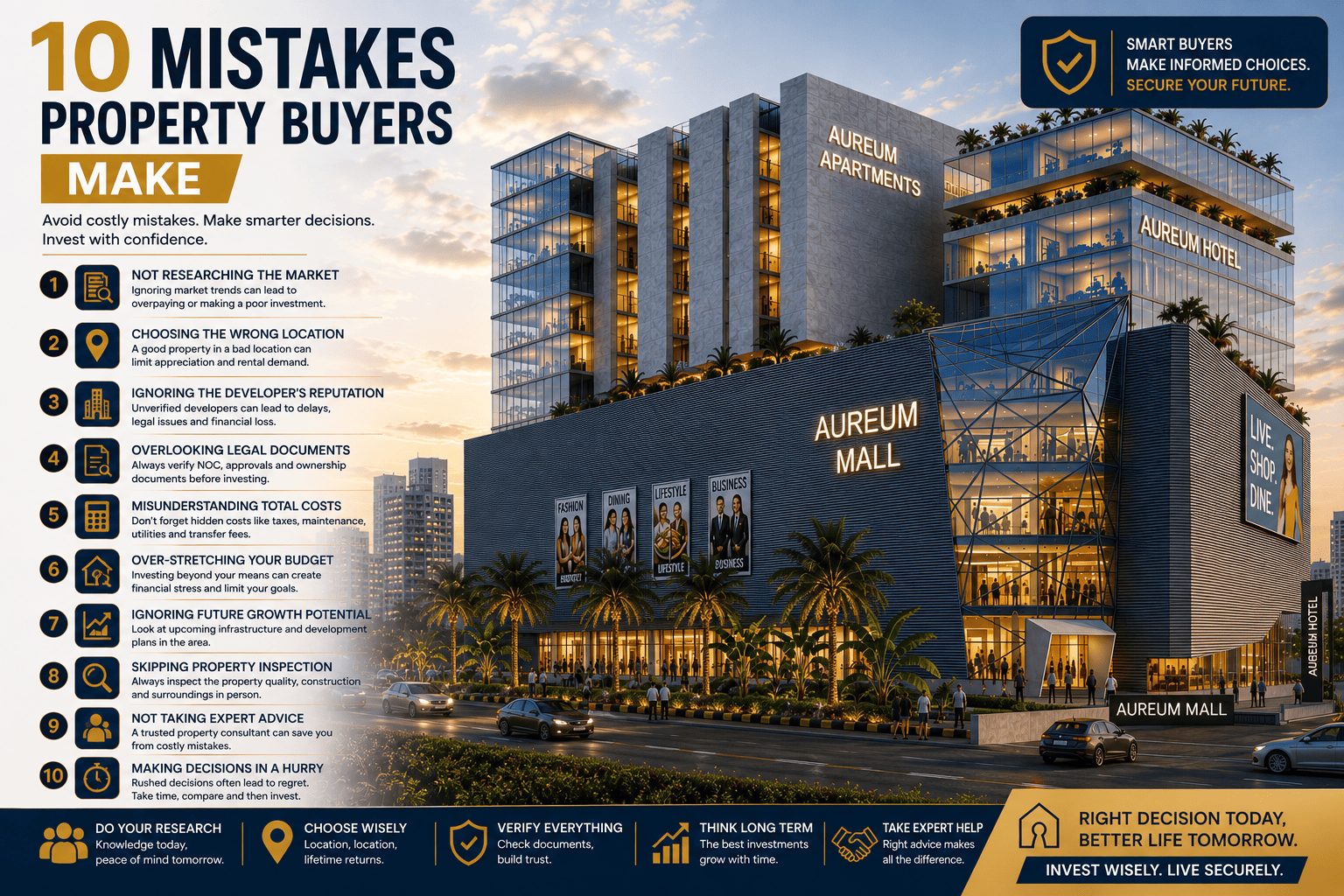
10 Mistakes Property Buyers Make
Buying property can be exciting. It can also be expensive when the decision is made without proper research.
Whether you’re purchasing your first apartment, investing in a commercial outlet, or expanding an existing property portfolio, avoiding common real estate mistakes is just as important as finding the right investment.
A beautiful brochure, attractive installment plan, or promising location should never be enough on its own. Smart property buyers look deeper. They investigate the developer, verify documentation, understand the total cost, study the location, and think about who may eventually rent or buy the property from them.
Here are 10 common mistakes property buyers should avoid.
1. Buying Without a Clear Investment Goal
One of the biggest real estate mistakes is buying property simply because an opportunity looks attractive.
Before investing, ask yourself:
Why am I buying this property?
Your objective could be:
- A home for your family
- Monthly rental income
- Long-term capital appreciation
- Commercial rental income
- Business use
- Future resale
- Portfolio diversification
Your goal should influence the type of property you choose.
For example, an apartment purchased for rental income should be evaluated differently from a commercial outlet purchased for long-term appreciation.
Know your objective before comparing projects.
2. Focusing Only on a Low Price
A cheaper property is not automatically a better investment.
Sometimes buyers become so focused on finding the lowest price that they overlook more important factors such as:
- Location
- Accessibility
- Construction quality
- Developer reputation
- Amenities
- Rental demand
- Commercial activity
- Future development
A property that appears inexpensive today may remain difficult to rent or resell if there is little genuine demand for the location.
Instead of asking only, “How cheap is it?”, ask:
“What value am I getting for this price?”
3. Ignoring the Developer’s Track Record
A project’s concept may look impressive on paper, but ultimately the developer is responsible for delivering it.
Before buying, research:
- Previous projects
- Construction progress
- Delivery history
- Quality standards
- Market reputation
- Customer feedback
For under-construction properties in particular, the developer’s credibility deserves serious attention.
A payment plan cannot compensate for weak execution.
4. Failing to Verify Legal Documentation
This is one of the most serious property buying mistakes.
Never assume that everything is legally compliant simply because a project is being advertised or sold.
Buyers should verify relevant documentation and approvals before making a financial commitment.
Depending on the property and project, this may include:
- Ownership documentation
- Relevant authority approvals
- Approved plans
- Sale agreement
- Payment terms
- Transfer procedures
- Possession conditions
If you do not understand the documentation, obtain advice from an appropriately qualified property lawyer or professional.
A few hours of proper due diligence can prevent years of complications.
5. Looking at the Property but Ignoring the Location
You can improve an apartment.
You can renovate a shop.
You cannot move the entire development.
That is why location remains one of the foundations of real estate value.
Before investing, evaluate:
- Road connectivity
- Surrounding population
- Nearby commercial activity
- Schools and hospitals
- Public amenities
- Major access routes
- Future infrastructure
- Neighborhood development
For Lahore investors, connectivity to major road networks such as Lahore Ring Road can be particularly relevant depending on the project and target market.
6. Choosing the Wrong Property Type
Another common real estate mistake is assuming every property produces returns in the same way.
It doesn’t.
Residential Apartments
May be suitable for:
- Rental income
- Families
- Professionals
- Long-term residential demand
Commercial Shops
May appeal to investors seeking:
- Business tenants
- Commercial rental income
- Retail exposure
- Foot traffic
Office Spaces
May be suitable for:
- Corporate tenants
- Professional businesses
- Commercial leasing
- Business use
Your investment strategy should determine the property type—not the other way around.
7. Ignoring the Total Cost of Ownership
The advertised property price isn’t always the complete amount you will eventually pay.
Depending on the project, additional costs can include:
- Booking charges
- Documentation charges
- Government taxes and fees
- Transfer charges
- Maintenance charges
- Utility-related costs
- Fit-out or furnishing expenses
Before purchasing, ask for a clear breakdown of all applicable costs.
For installment properties, also understand:
- Down payment
- Monthly or quarterly installments
- Balloon payments, if applicable
- Possession-related payment
- Late-payment conditions
A payment plan should fit comfortably within your financial capacity.
8. Ignoring Rental and Resale Demand
A property may look impressive, but will somebody want to rent it?
And when you eventually decide to sell, will another buyer want it?
These are critical questions.
Before investing, study the likely end user.
For an apartment, this might include:
- Families
- Young professionals
- Corporate employees
- Overseas Pakistanis
For commercial property, potential tenants may include:
- Retail brands
- Restaurants
- Cafés
- Pharmacies
- Service businesses
A good investment should have a clear potential user beyond the original buyer.
9. Being Influenced by Unrealistic ROI Claims
Property marketing often uses phrases such as:
- Guaranteed returns
- Massive appreciation
- Double your investment
- Best ROI
- Limited-time opportunity
These claims should never replace independent analysis.
Actual property returns depend on variables including:
- Market conditions
- Location
- Purchase price
- Rental occupancy
- Operating costs
- Future demand
- Economic conditions
No responsible investment decision should be based solely on an aggressive ROI promise.
Calculate potential returns using realistic assumptions and consider both positive and negative scenarios.
10. Making an Emotional Decision
Property purchases can become emotional very quickly.
You may love:
- The building design
- Apartment view
- Interior finishes
- Marketing campaign
- Model apartment
- Launch offer
But investment decisions should ultimately be based on numbers and fundamentals.
Before signing, compare:
- Price per unit or square foot
- Competing projects
- Payment terms
- Rental potential
- Location
- Developer credentials
- Amenities
- Resale potential
Fall in love with the lifestyle if you’re buying a home.
If you’re investing, make sure the numbers also make sense.
A Simple Property-Buying Checklist
Before investing, ask yourself:
Developer: Who is building the project, and what have they delivered before?
Legal: Have the relevant documents and approvals been independently verified?
Location: Is the property genuinely accessible and desirable?
Demand: Who will rent or buy this property from me?
Price: Is the price competitive compared with relevant alternatives?
Payment: Can I comfortably manage the complete payment schedule?
Amenities: Do the facilities genuinely improve the property’s appeal?
Exit Strategy: If I need to sell later, who is the likely buyer?
If you cannot answer these questions confidently, more research is needed.
Why Mixed-Use Developments Need Proper Evaluation
Mixed-use developments are becoming increasingly popular because they can combine:
- Residential apartments
- Commercial outlets
- Corporate offices
- Food courts
- Shopping
- Lifestyle amenities
This model can create a strong ecosystem because different components support one another.
Residents provide potential customers for retailers.
Office workers support cafés and restaurants.
Commercial activity adds convenience for residents.
However, simply calling a project “mixed-use” does not make it a good investment.
Buyers should still evaluate location, planning, developer capability, accessibility, parking, tenant mix, management, and long-term demand.
Buying Property in Bahria Town Lahore
Bahria Town Lahore attracts both homeowners and investors because of its established residential population, infrastructure, security, commercial activity, and lifestyle facilities.
However, buyers should avoid assuming that every property within Bahria Town will perform equally.
Even within the same community, property performance can vary according to:
- Exact location
- Accessibility
- Building quality
- Property type
- Developer
- Amenities
- Commercial activity
- Supply and demand
Good investors evaluate the individual project—not just the name of the surrounding community.
Spotlight: Aureum Mall & Residences
For buyers researching apartments and commercial opportunities in Bahria Town Lahore, Aureum Mall & Residences is positioned as a mixed-use project bringing several property categories together within one development.
The project includes or is planned around:
- Residential apartments
- Commercial outlets
- Corporate office spaces
- Food court
- Lifestyle amenities
- Parking
- Vertical transportation
- Family-oriented facilities
Its location near the Bahria Town Lahore Ring Road Interchange also makes connectivity an important part of the project’s proposition.
However, buyers considering Aureum—or any other project—should follow the same disciplined process discussed throughout this guide.
Review the latest official project documentation, payment plan, specifications, development status, applicable approvals, and contractual terms before making a purchase.
A strong investment decision should come from due diligence rather than marketing alone.
How to Avoid Real Estate Mistakes
The simplest way to reduce risk is to slow down the buying process.
Do not allow a limited-time offer to prevent you from researching an investment properly.
A disciplined buyer should:
- Define the investment objective.
- Establish a realistic budget.
- Shortlist suitable locations.
- Compare relevant projects.
- Research the developer.
- Verify documentation.
- Visit the project or location.
- Calculate total ownership cost.
- Evaluate rental and resale demand.
- Review the agreement before committing funds.
Real estate rewards informed decisions more consistently than impulsive ones.
Frequently Asked Questions
What are the most common real estate mistakes?
Common mistakes include buying without research, ignoring legal verification, choosing the wrong location, focusing only on price, overlooking additional costs, and believing unrealistic return projections.
What should I check before buying property?
Check the developer, project documentation, relevant approvals, location, payment terms, total costs, construction status, amenities, rental potential, and resale demand.
Is buying an apartment a good investment?
An apartment can be an attractive investment when there is genuine rental or buyer demand. Location, purchase price, amenities, developer reputation, maintenance costs, and market conditions all influence performance.
Is commercial property better than residential property?
Neither is automatically better. Residential and commercial properties serve different investment objectives. The right choice depends on your budget, desired income, risk tolerance, and investment horizon.
Should I buy property on installments?
Installment plans can make property ownership more manageable, but buyers should evaluate the complete purchase price and future payment obligations rather than focusing only on the initial booking amount.
How can first-time buyers reduce investment risk?
Research the market, compare multiple projects, independently verify important documents, calculate total costs, avoid unrealistic ROI expectations, and seek qualified professional advice when necessary.
Final Thoughts
The most expensive real estate mistakes usually happen before the property is purchased.
Choosing the wrong location, failing to verify documentation, misunderstanding the payment plan, or investing without considering rental and resale demand can turn an exciting purchase into a financial burden.
Successful property investment requires patience, research, and discipline.
Instead of asking only, “Will this property increase in value?”, ask better questions:
Why should demand increase? Who will rent it? Who will buy it from me later? What makes this location competitive? What risks am I taking?
Those questions lead to better decisions.
For buyers considering Aureum Mall & Residences in Bahria Town Lahore, the same principles apply. Evaluate the project’s apartments, commercial outlets, offices, amenities, location, payment structure, documentation, and development fundamentals carefully before making your decision.
The goal isn’t simply to buy property.
The goal is to buy the right property for the right reasons.

All Categories
Recent Posts


Aureum Mall & Residences Location & Ring Road Connectivity